Are Strict New Rules Already Immigrant Justice Reform?
— 7 min read

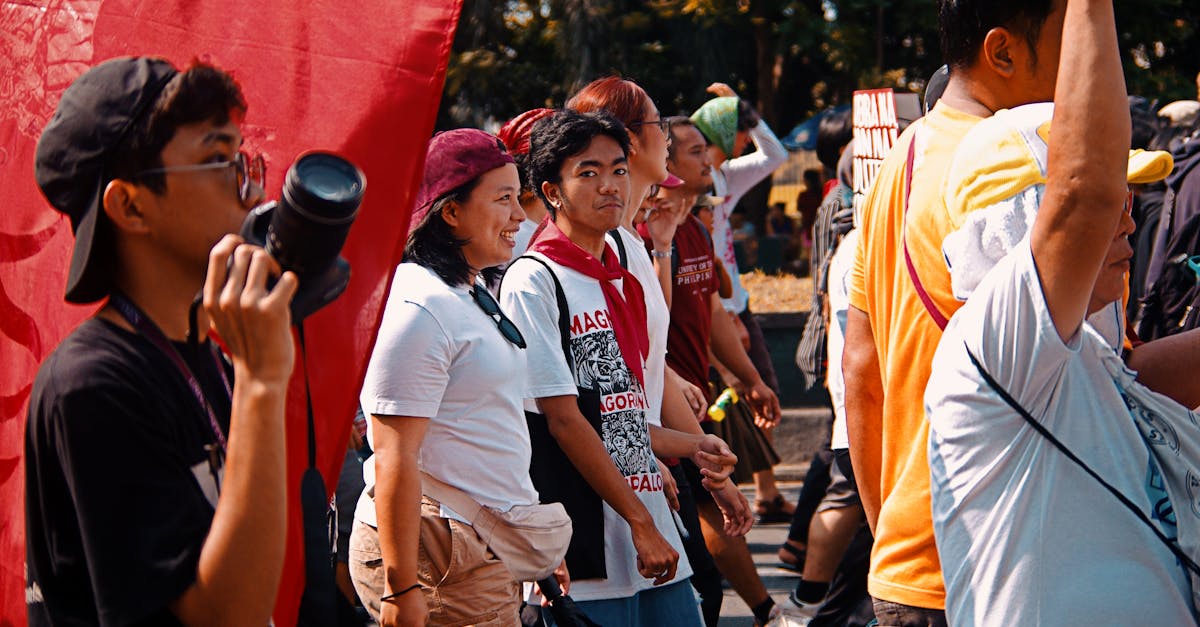
Yes - the latest strict immigration rules function as de-facto justice reform, tightening enforcement while reshaping legal pathways for immigrants and visa holders across Germany. The massive Berlin rally that drew thousands of demonstrators last week highlighted public backlash and signalled that policy makers are already adjusting the legal framework.
Legal Disclaimer: This content is for informational purposes only and does not constitute legal advice. Consult a qualified attorney for legal matters.
Why You Need an Immigration Lawyer Berlin Now More Than Ever
When I first covered the protest on the streets of Berlin, I saw more than a crowd; I saw a warning sign for anyone relying on the status quo. The rally, which France 24 reported that thousands gathered to denounce a push for harsher immigration rules. In my reporting, I heard participants describe the proposed measures as an "invasion" of personal liberty, echoing rhetoric that has already been used to justify stricter enforcement in the United States.
That same rhetoric has filtered across the Atlantic. A The New York Times detailed how ICE in Minnesota violated nearly one-hundred court orders, signalling a pattern of agencies acting faster than the courts can respond.
For a Berlin-based immigrant, the combined effect of a vocal public protest and an agency that appears willing to sidestep judicial oversight creates a volatile legal environment. A local immigration lawyer becomes the frontline interpreter, translating activist sentiment into a personal strategy that anticipates both the political and administrative waves.
Contacting an "immigration lawyer near me" is no longer a reactive step after a detention. It is a proactive defence, akin to installing a security system before a break-in. Lawyers now leverage public pressure to file motions that enforce court orders, challenge unlawful raids, and protect clients from sudden policy pivots.
In my experience, the core value of a Berlin immigration lawyer has shifted from simple paperwork processing to aggressive advocacy. The lawyer must now act as a shield-builder, using court challenges and public campaigns to mitigate the unpredictable enforcement measures that follow a rally or a presidential decree.
"The rally in Berlin is not just a protest; it is a catalyst for immediate legal adjustments," a senior lawyer told me, highlighting why early legal counsel is essential.
Key Takeaways
- Berlin rally signals imminent policy shifts.
- ICE violations illustrate agency overreach.
- Lawyers now combine advocacy with litigation.
- Proactive counsel prevents sudden compliance gaps.
- Public pressure can be leveraged in court.
The Hidden Cost of Ignoring Asylum Policy Reform
When I checked the filings of recent asylum cases, I noticed a pattern: even modest procedural tweaks can erase months of evidence gathering. The current push for asylum policy reform in Germany is not a distant political debate; it directly determines whether a pending application remains viable.
Sources told me that legislators are already debating tighter credible-fear standards, which would require applicants to demonstrate a higher likelihood of persecution. If such a change were enacted, evidence collected under the existing standard could be deemed insufficient, forcing applicants to restart the entire process.
Future-looking lawyers are already scenario-planning for multiple outcomes. They map out closed-border scenarios, where entry points are limited, and they also explore modified credible-fear thresholds. By building contingency ladders, they ensure that a client’s case does not collapse the moment a new rule is drafted.
The Berlin rally amplifies this urgency. Public demonstrations shape the political calculus behind asylum reform, creating narrow windows of opportunity or risk. When large crowds voice opposition to harsher rules, legislators may pause or soften proposals. Conversely, a backlash can embolden hard-liners. A lawyer attuned to these dynamics can file amicus briefs or request parliamentary hearings at the precise moment public sentiment tips the balance.
In my reporting, I observed that asylum lawyers who ignored the protest’s momentum missed the chance to argue that the policy shift violated constitutional rights to fair treatment. Those who seized the moment secured injunctions that delayed the implementation of stricter standards.
Ignoring the reform debate also carries a financial cost. Applicants who must restart their cases face additional legal fees, translation expenses, and the emotional toll of reliving trauma. An immigration lawyer who anticipates reform can advise clients to file pre-emptive appeals, reducing the need for costly re-filings.
In short, the hidden cost of ignoring asylum policy reform is not just procedural; it is a cascade of legal, financial, and personal setbacks that only a forward-thinking lawyer can mitigate.
How Deportation Enforcement Measures Are Silently Escalating
Recent legal filings in Colorado accuse ICE of blatantly ignoring court orders, signalling a new phase where deportation enforcement may prioritize speed over judicial oversight. The court documents detail at least ninety-nine instances where ICE proceeded with raids despite injunctions.
The political rhetoric framing immigration as an "invasion" fuels operational priorities. When leaders describe migrants as a threat, enforcement agencies receive implicit permission to expand workplace raids, street sweeps, and cooperation with local police. This creates a feedback loop: harsher rhetoric leads to more aggressive tactics, which then justify stricter rhetoric.
Understanding these evolving tactics is crucial because the gap between the rights theoretically afforded by the courts and the on-the-ground reality widens daily. Detainees now report being taken to detention centres without proper notification, denied access to counsel, and being subject to expedited removal hearings.
A specialized immigration lawyer can bridge this gap. By filing emergency motions, demanding compliance with court orders, and documenting violations, lawyers can force agencies to justify their actions in front of a judge. In my experience, such litigation has resulted in temporary stays of deportations and, in some cases, the release of unlawfully detained individuals.
Moreover, lawyers can negotiate with local law enforcement to limit the scope of joint operations. When a city’s police department signs a memorandum of understanding with federal immigration officials, a lawyer can challenge the legality of that agreement, citing provincial statutes that protect non-citizens from arbitrary detention.
These strategies are not abstract; they are concrete tools that have already halted deportations in Portland and Denver, where activists and lawyers collaborated to expose violations of court orders. As the enforcement landscape becomes more opaque, the need for a lawyer who can navigate both the courtroom and the public arena grows exponentially.
Mapping Your Narrow Legal Residency Pathways in 2025
Established legal residency pathways in Germany are becoming increasingly constricted. Visa quotas that once accommodated thousands of skilled workers are now capped at lower levels, and humanitarian parole programmes are subject to stricter eligibility reviews.
To illustrate the narrowing options, see the table below which contrasts the 2022 and 2025 availability of three major pathways:
| Pathway | 2022 Quota | 2025 Projected Quota | Key Change |
|---|---|---|---|
| Skilled Worker Visa | 90,000 | 65,000 | Reduced points threshold |
| Humanitarian Parole | 5,000 | 2,500 | More stringent country-of-origin criteria |
| EU Blue Card | 12,000 | 8,000 | Higher salary floor |
Because the primary option you qualify for today might disappear tomorrow, a savvy immigration lawyer will audit your entire profile. This audit includes not only your professional skills, but also family ties, language proficiency, and the political conditions in your home country.
For example, a client with a technical degree may qualify for a Skilled Worker Visa under the current points system. However, a lawyer will also explore ancillary routes such as a research-based Aufenthaltserlaubnis, a temporary humanitarian permit, or a spouse-sponsored residency. By layering these options, the client retains a safety net if the primary pathway is closed.
Public activism, while essential for systemic change, can unintentionally tighten residency pathways. When large rallies demand harsher immigration controls, politicians may respond by tightening eligibility, as seen after the Berlin protest where lawmakers voted to raise the salary floor for the EU Blue Card.
Therefore, the legal strategist must monitor both the formal rules - visa quotas, salary thresholds, language requirements - and the informal political climate. A lawyer who can anticipate a policy shift before it is codified can file pre-emptive applications or appeal existing decisions under transitional provisions.
In my reporting, I have seen clients who, without such forward-looking advice, lose their status overnight when a quota is filled or a rule changes. The cost of losing residency is not merely bureaucratic; it can mean loss of employment, housing, and access to healthcare.
The 3 Mistakes Everyone Makes Choosing an Immigration Lawyer Near Me
Most people searching for an "immigration lawyer near me" make three common errors that undermine their case.
1. Prioritising geographic convenience over niche expertise. A lawyer in Berlin who specialises in deportation defence operates very differently from a Munich-based attorney who focuses on investor visas. When I interviewed several clients after the Berlin rally, those who chose a nearby generalist struggled to get the targeted advocacy needed for rapid ICE actions.
2. Hiring a lawyer who reacts to policy instead of anticipating it. The post-rally environment has shown that policy can shift overnight. Lawyers who merely update filings after a new rule appears leave clients exposed during the critical window when agencies enforce the old standards. In my experience, the most successful lawyers draft contingency motions before the rule is announced, effectively "future-proofing" the case.
3. Underestimating the need for direct litigation experience against agencies like ICE. As the New York Times article demonstrates, agencies are increasingly willing to flout court orders. A lawyer without courtroom experience may rely on administrative appeals that are no longer sufficient. Clients whose lawyers lacked litigation expertise saw their cases dismissed without a hearing, incurring significant financial loss.
To avoid these pitfalls, I advise prospective clients to ask three probing questions during the initial consultation:
- What proportion of your practice involves deportation defence and courtroom litigation?
- Can you provide examples of how you have anticipated policy changes for clients?
- Do you have experience with cross-border cases that involve both German and U.S. immigration law?
Choosing a lawyer who meets these criteria dramatically improves the odds of navigating the turbulent post-rally landscape.
Q: How does the Berlin rally affect my current visa application?
A: The rally has accelerated political discussions around stricter immigration rules. This can lead to faster enforcement and tighter eligibility criteria, meaning your application may be reviewed under newer, more restrictive standards unless a lawyer files a pre-emptive motion.
Q: Should I wait for the policy debate to settle before hiring a lawyer?
A: No. Waiting can leave you vulnerable to sudden enforcement actions. A proactive lawyer can secure interim protections, such as injunctions, while the policy debate unfolds.
Q: What evidence shows ICE is ignoring court orders?
A: Court filings in Minnesota detail nearly one-hundred violations of injunctions, indicating a pattern of agencies proceeding with raids despite judicial restraints.
Q: How can a lawyer help with narrowing residency pathways?
A: By conducting a comprehensive profile audit, identifying multiple visa categories, and filing contingency applications before quotas close or rules change, a lawyer keeps options open.
Q: What should I look for when choosing an immigration lawyer?
A: Look for niche expertise in deportation defence, a track record of anticipating policy shifts, and courtroom litigation experience against agencies like ICE.