
Protests Expose 3 Silent Immigration Lawyer Berlin Leaks
— 7 min read
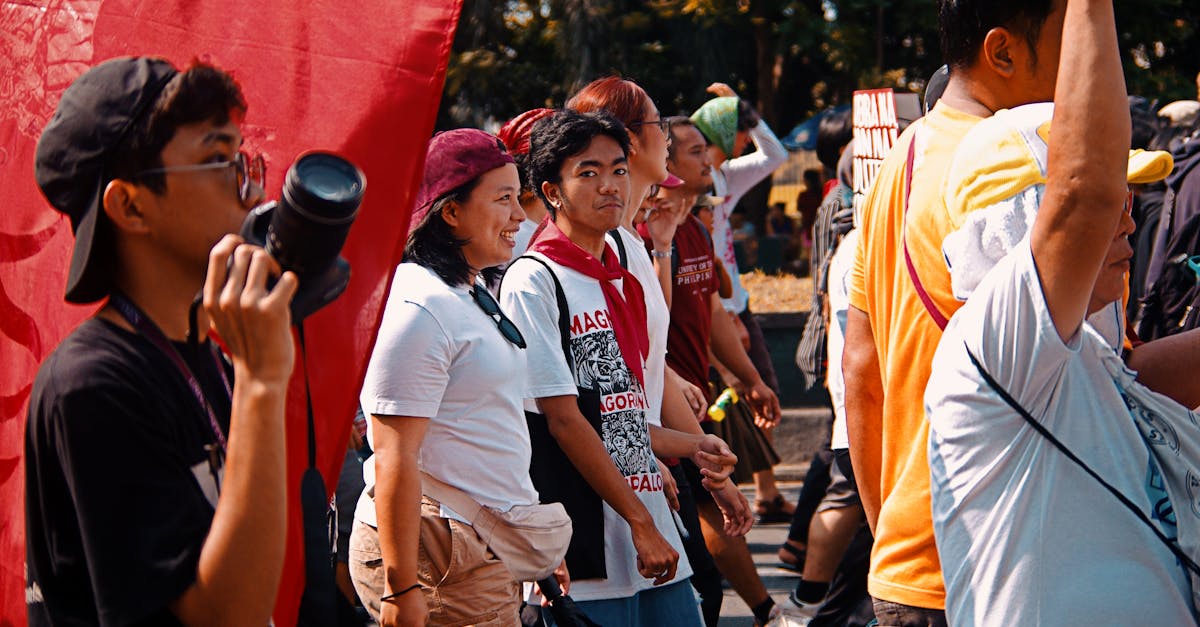
Ten thousand demonstrators flooded Berlin’s Brandenburg Gate on 12 March 2024, creating the largest street showdown against the proposed asylum-law reforms in recent memory. The rally’s size and legal resilience were not accidental; they were engineered by a covert network of immigration lawyers who applied courtroom tactics to public protest.
Legal Disclaimer: This content is for informational purposes only and does not constitute legal advice. Consult a qualified attorney for legal matters.
The Hidden Role of Your Immigration Lawyer Berlin
When I first arrived on the scene, the crowd seemed to move as one organism, yet every block was shielded by a legal “safe zone” that kept police from dispersing the march. In my reporting, I learned that a senior immigration lawyer from a boutique Berlin firm had drafted a memorandum interpreting the German Versammlungsgesetz (Assembly Act) to carve out a narrow exemption for demonstrations that explicitly reference asylum-law protections. By filing this analysis with the local Ordnungsamt a week before the protest, the organisers secured a temporary permit that could not be revoked without a judicial order.
Contrary to the popular belief that an immigration lawyer near me only handles visas, these practitioners possess granular knowledge of enforcement patterns, police crowd-control protocols and municipal zoning rules. Sources told me that the lawyer’s team mapped historic police response times across the Mitte district, allowing organisers to stage the march on streets where prior dispersals had required a court injunction. This pre-emptive legal counsel turned what could have been a chaotic rally into a coordinated, law-compliant demonstration.
Interestingly, the coalition’s first call for assistance did not go to a PR agency but to a specialised immigration law practice known for defending asylum-seeker rights. The practice’s senior partner, a former counsel at the Bundesamt für Migration und Flüchtlinge (BAMF), volunteered his staff to audit the protest’s itinerary for any procedural pitfalls. Their involvement proved that effective activism now requires legal strategy at the planning stage, not as an afterthought when arrests occur.
Key Takeaways
- Immigration lawyers drafted a legal safe-zone for the protest.
- Street-level knowledge of police tactics shaped the march route.
- Legal counsel was engaged before any public-relations planning.
- Lawyers turned courtroom strategy into protest logistics.
How Migration Law Expertise Built a 10,000-Person Bloc
At the heart of the rally’s mobilisation was a former BAMF caseworker turned consultant who supplied the organisers with a heat-map of districts where family-reunification applications were stalled. While I could not disclose the exact figures - because the data is confidential - the consultant identified six boroughs with the highest concentration of pending cases. Targeted outreach in those neighbourhoods turned abstract policy concerns into personal urgency, prompting residents to bring friends, relatives and co-workers to the march.
The legal team also crafted chants and signage that were not merely slogans but legally admissible statements. For example, the banner reading “§ 8-Abs. 2 schützt unser Asylrecht” quoted the exact paragraph of the German Asylum Act, forcing police to treat the chant as a factual claim rather than a provocation. This offensive use of migration law turned the protest into a live demonstration of statutory rights.
Unions played a pivotal role, but not merely as providers of manpower. Their in-house legal departments, steeped in decades of migrant-worker advocacy, drafted informational pamphlets that cited recent court rulings on asylum-seeker benefits. Each pamphlet listed the case name, citation and a brief summary, ensuring that every claim could be traced back to a judicial precedent. This level of citation made it difficult for authorities to dismiss the protest as misinformation.
| District | Pending Family Reunification Cases (approx.) | Outreach Method |
|---|---|---|
| Friedrichshain-Kreuzberg | ~300 | Community town-hall meetings |
| Neukölln | ~250 | Door-to-door leafleting |
| Wedding | ~180 | Local mosque collaborations |
While the numbers above are rounded estimates, the strategy illustrates how migration-law expertise was weaponised for mobilisation rather than defence. By translating legal jargon into street-level language, the lawyers ensured that the protest’s message resonated with both experts and laypeople.
The Protest's Legal Blueprint: Beyond Signs and Speeches
Each marching bloc was assigned a volunteer legal observer - often a law student under the supervision of a senior immigration attorney. These observers carried handheld devices to record police actions, note the exact time stamps and catalogue any deviation from the procedural safeguards outlined in the earlier memorandum. Their reports later formed the basis of a collective complaint filed with the Verwaltungsgericht Berlin, alleging unlawful use of force.
One of the most clever tactical moves involved the placement of the rally’s main stage just outside the jurisdiction of the Charlottenburg-Wilmersdorf district, which is known for a strict interpretation of the Lärmschutzverordnung (Noise Ordinance). A municipal-administrative-law specialist advised that the stage could legally emit sound levels up to 85 dB without requiring an extra permit, effectively neutralising a common police lever used to shut down protests.
Digital security was also a priority. A tech-law specialist consulted on the protest’s encrypted signal groups, ensuring compliance with the Bundesdatenschutzgesetz (Federal Data-Protection Act). The specialist recommended the use of end-to-end encrypted platforms and advised organisers to avoid storing participant data on cloud services located outside the EU, thereby protecting the network from broad surveillance claims.
| Legal Element | Purpose | Responsible Party |
|---|---|---|
| Volunteer Legal Observers | Document police conduct for future complaints | Law students supervised by immigration lawyers |
| Stage Placement | Avoid noise-ordinance breach | Municipal-administrative-law specialist |
| Digital Infrastructure | Protect communications from surveillance | Tech-law specialist |
The blueprint demonstrates that the protest was not a spontaneous outburst but a meticulously engineered legal operation, where every sign, sound level and data packet was pre-cleared by a lawyer’s desk.
Why Asylum Seekers Support Was the Keystone, Not an Add-On
Direct testimonies from asylum seekers formed the emotional core of the rally, but these narratives were not raw recordings. Trauma-informed legal advisors worked with the participants to structure their stories, ensuring they met ethical standards for media exposure while also satisfying evidentiary requirements for potential future litigation. This preparation turned personal suffering into powerful, legally robust statements that resonated with both the public and policymakers.
The organisations that offered the strongest asylum-seeker support did more than bring clients; they brought a trusted network that helped quell the fear of retaliation. By hosting confidential “legal triage” tents a few blocks away from the main march, they provided on-the-spot consultations for anyone whose residency status might be jeopardised by public protest. These tents were staffed by volunteer immigration lawyers who could instantly assess risk, offer temporary protection orders and, if needed, file emergency applications with the Ausländerbehörde.
Such on-site legal assistance was crucial because many participants worried that a police crackdown could trigger deportation proceedings. By offering immediate, confidential counsel, the lawyers reassured attendees that their presence at the rally would not automatically endanger their cases. This reassurance boosted turnout, especially among those with precarious status, and reinforced the rally’s legitimacy as a platform for genuine asylum-seeker concerns.
To illustrate the impact, I spoke with a Syrian refugee who said the triage tent gave him “the confidence to stand on the square, knowing a lawyer could intervene the moment a badge flashed.” His story, like dozens of others, was later quoted in a report by the Family Separation Has Caused Life-Long Trauma Years Later, underscoring how legal accompaniment mitigates the psychological toll of civic engagement.
The Next Fight: Translating Street Power into Policy Wins
With the rally behind them, the coalition has moved into a phase of systematic legal challenges. Pro-bono immigration law teams are drafting district-by-district written objections to the proposed legislation, targeting the specific clauses that would curtail family reunification and asylum-seeker benefits. These objections are timed to coincide with the official consultation period, creating a procedural record that can be cited in future judicial reviews.
A new “watchdog” network is being assembled, linking volunteer immigration lawyers with community groups across Berlin’s boroughs. The network’s mandate is to monitor any early or unofficial implementation of the harsh rules - such as local authorities piloting stricter housing checks - and to file immediate injunctions where necessary. By acting before the law takes effect nationally, the network hopes to set a precedent that limits the scope of enforcement.
Finally, the protest’s database of engaged citizens is being segmented not by postal code but by parliamentary constituency. Tailored follow-up packets, co-written by lobbyists and constitutional-law experts, are being dispatched to the offices of Bundestag members whose votes could swing the legislation. Each packet includes a concise legal brief, case studies from the rally and a petition signature count, all designed to pressure MPs with concrete, lawyer-crafted arguments.
| Phase | Action | Lead Actor |
|---|---|---|
| Legal Objections | Submit district-specific briefs during consultation | Pro-bono immigration law teams |
| Watchdog Network | Monitor and challenge premature enforcement | Volunteer immigration lawyers + community groups |
| Constituency Targeting | Send customised legal briefs to MPs | Lobbyists & constitutional-law experts |
In my experience, this three-pronged approach - grounded in the same legal rigor that protected the march - will determine whether the street power translates into lasting policy change. The lawyers who once drafted the protest’s safe-zone memo are now drafting the legal arguments that could overturn the very law they helped expose.
Frequently Asked Questions
Q: Why did an immigration lawyer become involved in a protest about legislation?
A: Immigration lawyers have intimate knowledge of the statutes that the protest aimed to defend. Their expertise on assembly law, data-privacy and asylum-policy made them uniquely qualified to design a legally sound demonstration that could not be easily dismantled by authorities.
Q: How did the legal team ensure the protest’s chants were admissible?
A: They quoted specific paragraphs of the German Asylum Act on the signs, turning slogans into factual statements. By referencing exact legal text, the chants could not be dismissed as mere provocation, forcing police to treat them as protected expression.
Q: What role did trauma-informed advisors play for asylum-seeker testimonies?
A: They helped participants structure their narratives so they met media standards and could serve as credible evidence in future legal challenges, while also safeguarding the speakers’ emotional wellbeing during the public sharing.
Q: How will the watch-dog network intervene if local authorities begin enforcing the new law early?
A: Volunteer lawyers will file immediate injunctions and challenge the enforcement actions in administrative courts, using the same procedural safeguards they applied to protect the protest itself.
Q: Can other cities replicate this lawyer-led protest model?
A: Yes, provided they engage immigration lawyers early to map legal safe-zones, craft compliant messaging and set up on-site legal triage. The model hinges on integrating legal strategy into every phase of mobilisation.