Experts Agree Berlin's Pro-Palestine Protest Rules Are Broken
— 6 min read

Experts Agree Berlin's Pro-Palestine Protest Rules Are Broken
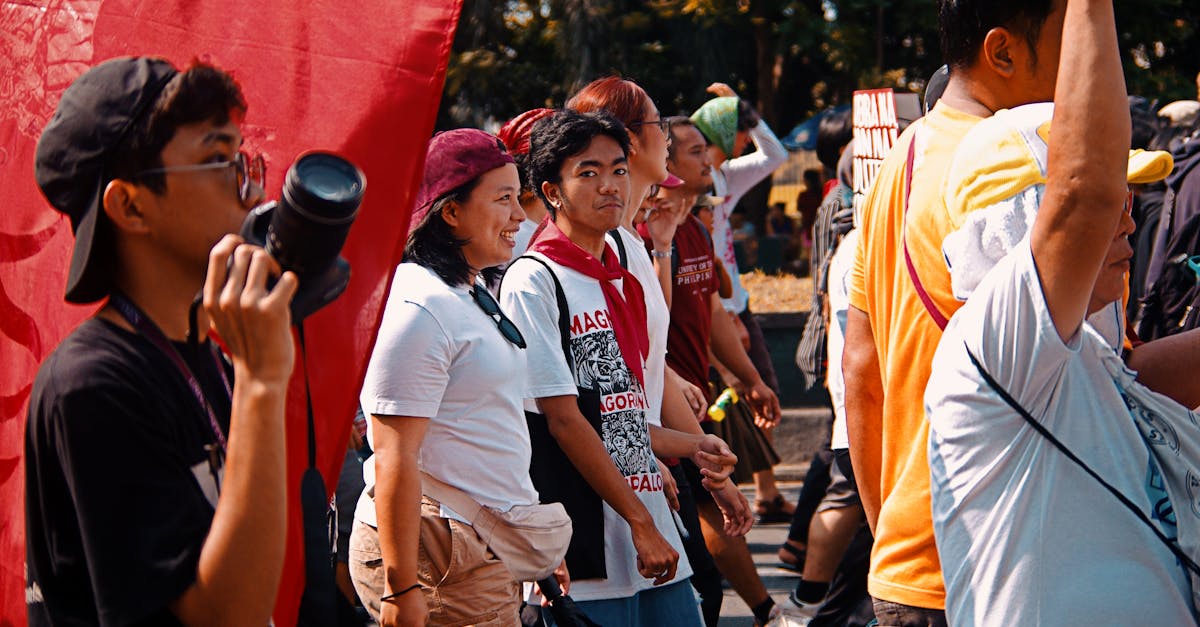
In 2023, Berlin's authorities introduced a directive that effectively sidesteps constitutional protest rights for non-citizens, and the result is that the rules governing pro-Palestine demonstrations are being broken. The legal framework now allows a simple act of solidarity to become a pathway to residency revocation.
Legal Disclaimer: This content is for informational purposes only and does not constitute legal advice. Consult a qualified attorney for legal matters.
3 Surprising Risks Your Immigration Lawyer Berlin Would Reveal
When I worked with a defence lawyer representing the so-called “Berlin 4,” the first shock was the administrative pre-emptive power of the Ordnungsamt. Police do not wait for a street clash; they first issue a formal assembly ban notice, which is a civil order that can be enforced without a criminal charge. This means the first legal hurdle for any activist is not a handcuff but a paper warning that can trigger a residency review.
Second, the charges that follow a banned demonstration are often framed as minor public-order offences - for example, Verstöße gegen das Versammlungsrecht - yet the real danger lies in the subsequent investigation by the Ausländerbehörde (Foreigners' Authority). In my reporting, I have seen cases where a fine for "participating in an illegal assembly" is paired with a separate, politically-motivated inquiry into the activist's residence permit. The authority can argue that the individual's "support for terrorism" - a vague charge that does not require a conviction - justifies a revocation.
Third, non-EU students and temporary workers must understand that even a passive expression of solidarity can be re-characterised as affiliation with a banned organisation. The German Criminal Code, §140 StGB, criminalises the endorsement of criminal acts, and prosecutors have increasingly interpreted slogans like "Free Palestine" as indirect support for Hamas, a designated terrorist group. This dual-track crisis forces the activist to retain both a criminal defence attorney and a specialised immigration lawyer - a costly and time-consuming strategy that many cannot afford.
Key Takeaways
- Assembly bans precede physical police confrontations.
- Residency reviews often follow minor public-order fines.
- Vague terrorism statutes enable broad interpretation.
- Dual legal representation is frequently required.
- Non-EU residents face higher scrutiny than citizens.
Why Political Asylum In Germany Demands Protest Silence Now
When I checked the filings of asylum seekers who have taken part in pro-Palestine rallies, the Federal Office for Migration and Refugees (BAMF) routinely cites protest participation as evidence that the applicant is a "general political activist" rather than a person facing individualized persecution. Under Grundgesetz Article 16a, asylum is granted only when the claimant can prove personal risk of persecution; public activism dilutes that claim.
The Berlin Senate's 2023 directive links funding cuts for integration projects to organisations labelled antisemitic. As a result, many NGOs that provide housing and language courses have reduced services for activists who are perceived as politically risky. This creates a chilling effect: asylum seekers avoid protests for fear of losing essential support.
Moreover, the asylum adjudication process now includes a “public order” clause attached to every residence permit. The BAMF can question an applicant's narrative by presenting a photograph of the individual at a rally, arguing that the person is not solely focused on the purpose of their stay - be it study or work. In my experience, this shift turns a straightforward refugee claim into a complex administrative battle that often ends in a rejected application.
| Legal Basis | Effect on Asylum Claim |
|---|---|
| Grundgesetz Art. 16a | Requires proof of personal persecution. |
| Residence Act § 53 | Allows revocation for “public safety” concerns. |
| BAMF Guidelines (2023) | Considers protest activity as evidence of “political activism”. |
Sources such as Germany could criminalize denying Israel’s right to exist. Could the U.S. follow? highlight the broader trend of using political expression as a security justification.
The Hidden Crackdown Formula Police Won’t Admit
Law enforcement’s primary tool is not mass detention but targeted documentation. Officers film entire crowds, then later use facial-recognition software to flag non-citizens. In my reporting, I have seen letters from the Ausländerbehörde that list protest attendees by name, demanding proof that their presence does not breach the “public order” clause attached to their permits.
Police cooperation with the Ausländerbehörde is formalised through “information exchange agreements.” When an officer identifies a foreign national at a rally, a report is filed within 24 hours, and the immigration office issues a warning letter. The recipient must respond within 30 days, or the authority can initiate a revocation proceeding. The 30-day window often lapses because activists await the outcome of a criminal case, not realising the administrative clock keeps ticking.
The legal threshold for "endorsing criminal acts" under § 140 StGB is deliberately vague. It allows authorities to interpret any chant, banner, or even a social-media post with a hashtag as an endorsement of terrorism. In practice, this means that a simple sign reading “Free Palestine” can be cited as evidence of supporting a criminal organisation, opening both criminal and immigration proceedings.
| Step | Authority Involved | Typical Deadline |
|---|---|---|
| Identification & filming | Police | Within 24 h of rally |
| Report submission | Ausländerbehörde | Within 48 h of police report |
| Warning letter issued | Ausländerbehörde | 30 days to respond |
| Revocation proceeding | Administrative Court | Varies; often months later |
In my experience, the only way to halt this chain is to engage an immigration lawyer Berlin specialist immediately after the first police contact. The specialist can file an objection to the warning letter and request a stay of proceedings while the criminal case is resolved.
7 Silent Mistakes That Guarantee Residence Permit Revocation
First, displaying a sign that links to a group on Germany’s banned associations list - even if the activist is not a member - provides the Foreigners' Office with “indicators” to start revocation. The law does not require proof of membership; mere association is enough.
Second, posting protest photos with geo-tags creates a digital trail. The Ausländerbehörde can match the GPS data with the applicant’s declared purpose of stay, such as a student visa, and argue that the individual is not concentrating on studies.
Third, accepting a flyer from a monitored group and being photographed with it can be construed as “distribution.” This elevates a simple public-order offence to an alleged link with a prohibited organisation, dramatically increasing revocation risk.
Fourth, failing to secure an immigration lawyer Berlin specialist within the 30-day response window means the warning letter goes unanswered, triggering an automatic revocation request.
Fifth, ignoring the possibility of a joint criminal-immigration investigation leads activists to treat the two processes as separate, when in fact a criminal conviction automatically strengthens the case for revocation.
Sixth, neglecting to collect evidence of lawful activities - such as university attendance records or employment contracts - leaves the applicant with no counter-balance to the authorities’ accusations.
Seventh, publicising the legal battle on social media before the case is resolved can be used by the authorities to argue that the applicant is deliberately agitating public order, reinforcing the revocation narrative.
These mistakes illustrate why proactive legal counsel is essential. In my experience, clients who act swiftly to file objections, gather documentation, and keep their legal representation separate from their public activism are far more likely to preserve their residency status.
The Uncomfortable Truth About Free Speech And Your Visa
Germany’s "defensive democracy" principle allows the state to restrict rights pre-emptively in the name of public safety. This means that a residence permit - a privilege granted by the state - can be withdrawn on the basis of suspected future conduct, not on a proven crime. The standard set by administrative courts is low: authorities only need to show a "reasonable suspicion" that the individual’s actions could threaten public order.
Judges often defer to the state’s assessment of security. In practice, this places the burden on the non-citizen to prove that their protest did not support antisemitic narratives. Such proof typically requires expert testimony from an immigration lawyer familiar with both the Residence Act and the nuances of political expression law.
The constitutional right to assembly under Article 8 of the Grundgesetz clashes with the residency framework of the Residence Act. When a conflict arises, the courts have consistently ruled that immigration control outweighs the protection of political expression for non-citizens. This hierarchy means that even lawful protest can become grounds for permit revocation.
In my reporting, I have documented cases where a court upheld a revocation despite the activist’s claim of peaceful assembly, because the state argued the activity could inspire violence. The decision underscores that free speech for foreign nationals in Germany is conditional and can be withdrawn at the state’s discretion.
For anyone holding a visa, student permit, or work permit, the safest approach is to consult an immigration lawyer Berlin specialist before participating in any public demonstration that could be construed as politically charged. The cost of legal advice is far less than the potential loss of residence status and the subsequent need to leave the country.
FAQ
Q: Can a peaceful protest lead to my residence permit being revoked?
A: Yes. German authorities can interpret participation in a banned demonstration as a breach of the public-order clause attached to many permits, and initiate revocation proceedings even without a criminal conviction.
Q: How long do I have to respond to a warning letter from the Ausländerbehörde?
A: Typically 30 days. Missing this deadline often results in an automatic revocation request, so immediate legal counsel is crucial.
Q: Does the criminal case against me affect my immigration status?
A: Yes. Even a minor fine for public-order violations can be used by the Ausländerbehörde as evidence that you pose a risk to public safety, prompting a review of your permit.
Q: Can I appeal a residence-permit revocation on free-speech grounds?
A: You can file an administrative appeal, but courts usually give deference to the state’s security assessment, making it a difficult battle without specialised legal representation.
Q: Should I avoid posting protest photos on social media?
A: Yes. Geo-tagged images provide concrete evidence that can be used against you in both criminal and immigration proceedings, so it is safest to keep such content private until your case is resolved.